
While I was rereading my own novels as a prelude to finishing In Victrix, I was reminded of an old adage about genres:
Mystery is solving a crime, while thriller is racing to prevent the crime. Horror is watching the crime happen
(If anyone knows the origins of this quote, please tell me!)
We are also well conditioned by now about crimes, murder is particular, needing means, motives, and opportunities to prove. We’re used to out detective struggling with questions of How, Who, and Why. I think there’s an interesting interplay between these dimensions, which I plan to explore in this post.
The stories in the Togas, Daggers, and Magic series draw on each element on Roman culture, the paranormal, and a mystery. While there are certain dark elements due to the occult side and the occasional race or action scene, the main aspect of the mystery is a detective solving a crime.
Felix gets called after the fact, and must chase down the How, Who, and Why of the crime to bring justice for his employer. Each of the three novels, and quite apart from everything else that is going on, each one is based on a different question. Felix must have course answer all three questions every time, yet each novel has a different core question that he struggles with. These, I believe, contribute to the different tone of each novel.
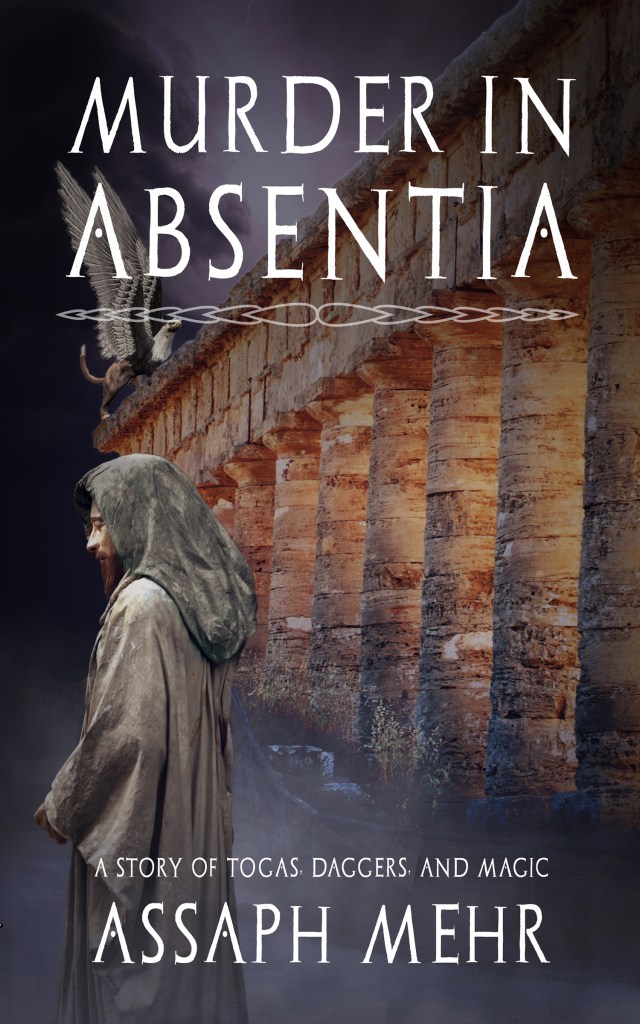
Murder In Absentia started in my mind as a locked-room mystery. In a world where there is magic, that gets a bit more complicated than a door-bolted-from-inside scenario, and we are facing a crime that could not have happened. While all the signs unequivocally point that a man died from a very specific cause, there’s also no way that said cause could have happened.
So amid tracking the deceased’s last journey, questioning people, fighting pirates, learning about fish sauce (hey, first-time author; give me some slack on the occasionally heavy-handed world-building), Felix is mostly trying to figure out HOW on earth could a man die in circumstances that clearly could not happen.
That, in turn, creates a tone of a puzzle. There is somewhat less urgency as Felix tries to piece everything together, as he tries to figure out the who in the hope that this will show him how it was done. The question of why isn’t even clear, and only comes up at the end. In essence, the how also pointed Felix at the why, which he ties all together in a Agatha Christie-like dénouement with all the interested parties in the room.
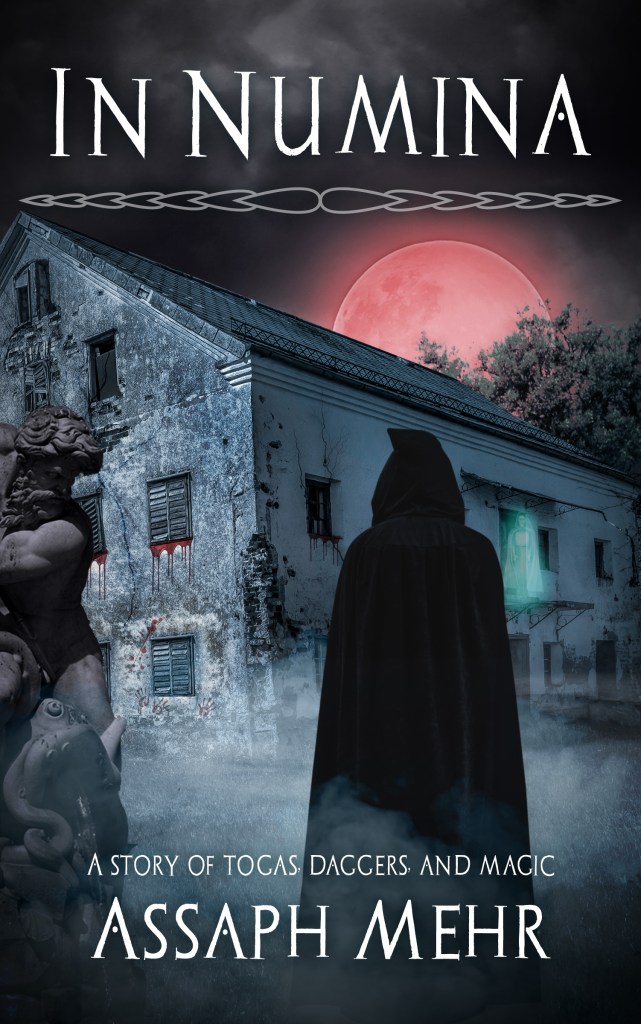
While the how in Felix’s next major case, In Numina, is interesting for many reasons, it isn’t the crux of the matter. The question that keeps the plot going is WHO. It takes Felix some time to deconstruct the how (and we get a view inside the workings of the occult crimes as they happen — hence elements of horror, as per the quote that opened this post), and then track down those responsible. But it doesn’t end there!
Who is ultimately responsible goes beyond just identifying the culprit that triggered the occult events, but proving responsibility in open court. Culpability turns out a complex legal issue and the heart of the drama in the case. The tone of the novel therefore has elements of frustration, born from knowing the details of the crime but struggling to prove it and bring justice to those wronged.
In the soon-to-be-published 3rd novel, In Victrix, the burning question that underpins events is WHY. While Felix deals with the how of the crime (not a murder, at least not initially), and then slowly uncover who did it. But therein lies the rub — though Felix sees several suspects with means and opportunities, none of them has any motivation to commit the crime.

While the motivations of accomplices unravel along the case and lead Felix to those who commissioned the crime, by the ‘end’ Felix actually deals with the culprits without uncovering their motivation. It takes a following crime to bring that aspect — and the case — to a close.
Because the motivation behind the crime is deeply personal, so is the tone of the book. It is certainly the most emotional of the tree novels, as we delve into the psyche of the perpetrators and what might drive them to commit such acts of extreme, personal aggression against the victim.
There are other things going in the novels, of course. Lots and lots of other aspects that influenced my writing, from Roman trivia that I wanted to explore and work in, to general pacing, and character arcs, and world building, and — let’s not ignore it — my craft improving with practice.
But I thought that calling out this separate dimension and highlighting how a focus on a particular aspect of the crime can affect a lot of the tone of the mystery, and how it needs to work together with all the other elements.
So if we take it that each question leans in a distinct direction:
- HOW: a more cerebral tone, assembling the puzzle in a Sherlock Holmes style
- WHO: the classic chasing of culpability, what we normally think of in police and detective stories
- WHY: a deeply personal tone, understanding what moves people to extremes
A novel, or part of a novel, that explores this question must have supporting elements so that everything just ‘works’, just clicks together for a cohesive story. The converse is also true. Murder In Absentia contains a lot of world building as the first novel in the series (and a first time fantasy writer 😅), and so the natural focus on the question how. In writing In Victrix I wanted to explore the fraught subject of women’s role in society, and exploring the reasons behind societal structures lends to also exploring the motivations of crimes, the why.
Or it could be a novel that deals with all three questions more or less equally, as they are after all intertwined. The first act of In Numina is about the how (which being supernatural, has elements of horror), the second act is about the identifying who to understand why, and consequently starts by chasing people and ends up in a clash. The last act is about proving who is responsible, taking the story to a court-room drama rather than classic gumshoe and — as anyone who dealt with lawyers knows — is fraught with frustrations.
Anyway, I thought this was an interesting observations, a hidden aspect that deserves more discussion. What are your favourite mysteries? What are the key questions the detective struggles with, and how do they affect the tone of the books? Would love to hear from you in the comments!
Enjoying the articles, but curious if I’m just full of it or really make use of those varied subjects? Happy to elaborate! Go meet Felix, the protagonist of the Togas, Daggers, and Magic series, an historical-fantasy blend of a paranormal detective on the background of ancient Rome.
You can Felix and his world on the free short stories and novels!
 FELIX THE FOX MYSTERIES
0 Comments