As mentioned on my previous post on the subject, I’ve been somewhat binging Outback Noir (crime fiction set in rural Australia) with a view to writing a Magical-Realism novel along similar lines. Below are condensed reviews of two novels and a TV show, all being excellent examples of the genre.
Quick aside: did you know that two of my short stories have been published in the just-released anthology It Takes A Village? Two stories, one sci-fi and one fantasy, about the meaning of caring for others. If you care about social justice, you owe it to yourself to check it out!
On to the reviews — with my thoughts and observations on the genre at the end!
The reviews
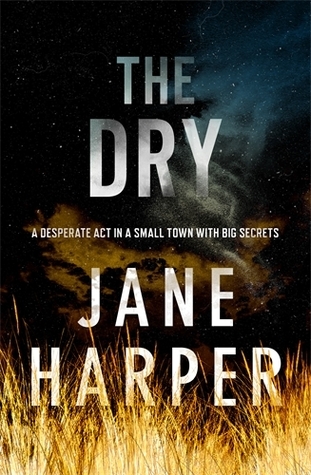
First is The Dry. This novel comes up tops in all the lists of Outback Noir — for good reason.
The story is set in a small rural town in Victoria, during years of drought. Like other crime fiction, uncovering the perpetrator of the crime is only half the story — the other is uncovering all the dark secrets from the past that culminated in the current act violence.
It’s a beautifully written haunting story of the tensions that lead up to an horrific crime. One can see why it came to be recognised as a genre-defining work. Harper masterfully weaves past and present, teases and reveals information over the span of the story, and leads the reader in an engrossing tale of a small town rocked by heinous acts.
You can read my full review on Goodreads.
I also just found out that there was a movie adaptation with Eric Bana, available on Netflix. It’s a reasonable adaptation (in some ways better than Nine Perfect Strangers was). They got a lot of the “feel” right and the memorable scenes, even if they had to gloss over and cut some of the deeper details and back and forth that makes a detective story).
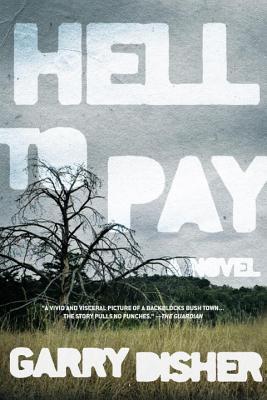
Next is Gary Disher’s Hell To Pay, originally published under the title Bitter Wash Road. The latter is how it appears on all the list recommending Australian crime fiction (and is a better title in my opinion), but the former is how it’s listed on Goodreads and sometimes sold.
The novel introduces us to Constable Hirschhausen — “Hirsch” — as he is posted to a remote outback town, a one-policeman station. Nobody likes him, and we slowly learn the reason why and for his posting into this remote location.
Doesn’t take long till he’s got a dead body on his hands, though. An apparent hit-and-run, which he tries to track down. This is later followed by an unrelated suicide, but things don’t add up and both deaths raise more questions for Hirsch. Investigating them when even your colleagues don’t trust you, let alone the townspeople, isn’t easy.
The story is well-written, highly reflective of rural Australian life. Hirsch is far from perfect but very likeable, the plot moves along at a decent clip, and there’s enough going on on all fronts (current and past crimes, corruption, the highs and lows of country life) to keep readers engaged.
You can read my full review on Goodreads.
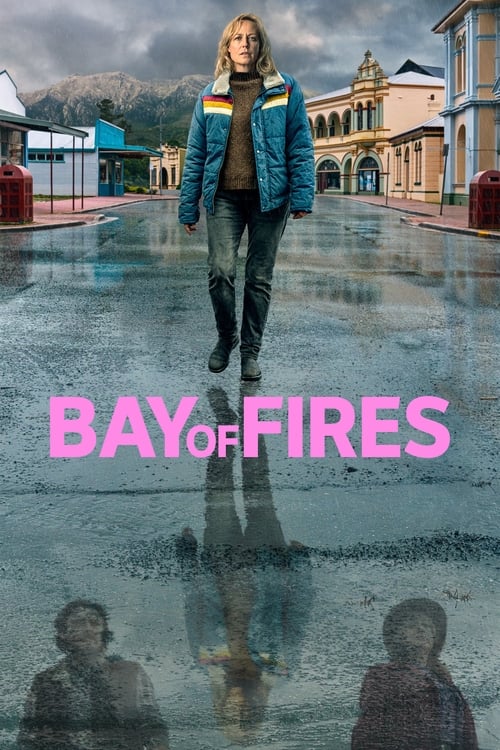
AS for the TV show, if you liked Deadloch, you’ll enjoy Bay of Fires. Out of all of these, this is the only one set in Tasmania.
Unlike the novels above, it’s not a police drama. But like Deadloch, it’s an excellent show with dark humour and crazy twists.
The story starts when Annike, a successful CEO finds herself the target of Russian mob hitmen. Before she even has a chance to think, she is whisked by witness protection together with her two children to a (very) remote Tasmanian town.
All she has is a new, somewhat unpronounceable, name, a bit of cash, and a lot of anxiety. No phone or friends, no idea what’s going on, she’s trying to make sense of life in a strange town where everyone is very suspicious of her (and suspicious in general).
Excellent characters, pace, and twists. Dark humour between breathtaking shots of the Tasmanian old forests. It’s only available on ABC iView as far as I can tell (ie only available if you’re in Australia), but if you find it or otherwise get the chance to watch it I highly recommend it.

And, as a bonus, there was always Savage River (also only available on ABC iView, unfortunately). It’s another small-town Australian crime thriller (well, duh, that’s what this post is about), this one about a girl returning to her home town after 10 years in prison for the murder of her best friend.
It has all the right elements — quirky characters with murky pasts, zero-prospects middle-of-nowhere town, and crimes past and present — for a worthy inclusion alongside the above books.
Where it differs from the other two TV series, is that it doesn’t have the dark humour and zaniness. That’s just an observation, not a criticism. I still found it a good crime story, steeped in Australian vibes.
The genre
What can we make of the Outback Noir, and probably Crime Fiction in general?
A quote I heard recently is very apt here: Everything is Always About Something Else. It seems like the crime at hand is only the surface, and it doesn’t take a lot of scratching to realise it’s about something else — often an older crime that is somehow connected. Makes sense, as crimes (at least the interesting ones) are rarely random. There’s a whole boiling mess under the surface, the current corpse is just the culmination. It’s the detective’s job to dig it all up and lay it in the open to satisfy our morbid curiosity.
The genre seems to thrive on uncovering these old dramas in snapshots of slow reveal as much as it thrives on corrupt police organisations and the Australian vast landscapes. (Foreigners seem to underestimate how remote things can get around Australia: population 3 times that of London, mostly concentrated in a handful of big cities across a continent the size of Europe).
Back to the subject. Hirsch himself tells us that:
In his view there were three essential truths to police work: most crimes go unpunished; most crimes are solved not by forensics but chance, an admission or a word in your ear; and detection matters less than the piecing together of rumors, sightings, theories and random scraps of information.
I think it’s these two aspects combined that make for the genre. An obvious crime that’s all about the accumulation of dirt that brought it about, and the dogged persistence of piecing together means, motives, and opportunity.
I’ve noted before that each of the Felix novels is focused on a different question and therefore has a different tone. But these two observations help me set up my next project in a way that will (hopefully) be subtly different, less hard-boiled detective, more about the dogged digging of dirt. I think these aspects are far more important than the technicalities of police work. I absorb enough of the lingo and procedures (and will attempt to get a police advisor to fix the more egregious errors), but it’s that fundamental feeling of how Crime Fiction works that interests me.
Mixed with a healthy doze of magic, of course 😉
Enjoying my rambling or reading and writing? It’s a bit too soon to announce that other project I mentioned — let me get In Victrix out the door first this year — but in the meantime enjoy Felix’s free short stories and novels, blending fantasy, mystery, and history.
 FELIX THE FOX MYSTERIES
0 Comments