As of last weekend, I finished an introductory novella in the new Unusual Crimes Squad series! I am super excited for you to meet Detective Inspector Jack Finkel, as he works through a most unusual crime 😉🕵️
This was written as a response to the prompt of colours as a central theme in Purple Toga’s call for short stories, for the Rainbows Aren’t Just For Leprechauns anthology. (Submissions still open, if you you’d like to try).

My submission is titled “Sandstone,” as it’s (almost) an open love letter to one of Sydney’s most prominent features, the colonial architecture done in the distinctive hues of locally quarried sandstone. It was the perfect case to highlight Jack’s style, past, and reason to move to Tasmania 😉
Of course, by “finished” I mean I finished the first draft. I am now in possession of the beta readers comments and a glass of whisky…
There’s also no guarantee it will be accepted. Besides, there are still some editing to be done, and a cover to commission. I plan to publish it closer to the publication of the first full novel, Small Batch Djinn. There will, however, be a mini case-file flash-fiction in a couple of months on my newsletter, so make sure you subscribe not to miss it. There will be more next year.
In case you missed it, In Victrix is now available! Felix is still going strong — come read his latest adventure, a tales of Races, Curses, and Forbidden Places!
While you’re waiting for those unusual crimes, I thought I’d share with you some insight into the feverish mind that dreams them. Or, in other words, my writing process. This is half aimed at myself, as I’m sure I’ll forget 😅 There should also be a follow up post about the production on books (the tools I use to go from edited manuscript to something in the hands of readers), for the same reasons.
The reason I forget is there’s been a bit of a hiatus, when life went sideways in 2020. This year I managed to get back to writing, submitting two stories for It Takes A Village and now completing the novella. I wasn’t quite happy with progress though, finding that I only write sporadically. So about two months ago I promised myself I would write a single sentence each night. It’s the consistency that matters, with tangible progress. I’m happy to report there was only one night I actually wrote just a single sentence, and the rest of the time I averaged about a page (usually much faster as I near the ending). I only lost two night on account of having no power after the storms. It may not be epic productivity, but I can write the first draft of a novel in a year this way, which is just fine by me.
As for the actual writing, I start a story with an idea of what’s it’s about, what’s the core. I usually have some ideas around that. That often involves the magical crime aspect and main characters (this applies to both Felix and Jack mysteries, but also to a couple of as-yet unfinished projects… 😅)
I write in Scrivener, mostly for the scene structure. I’ve used yWriter before, which is free and does a good job at that. Even though I write sequentially, I like to have a tree structure to navigate between scenes as I go back to check or fix something while writing the current scene.
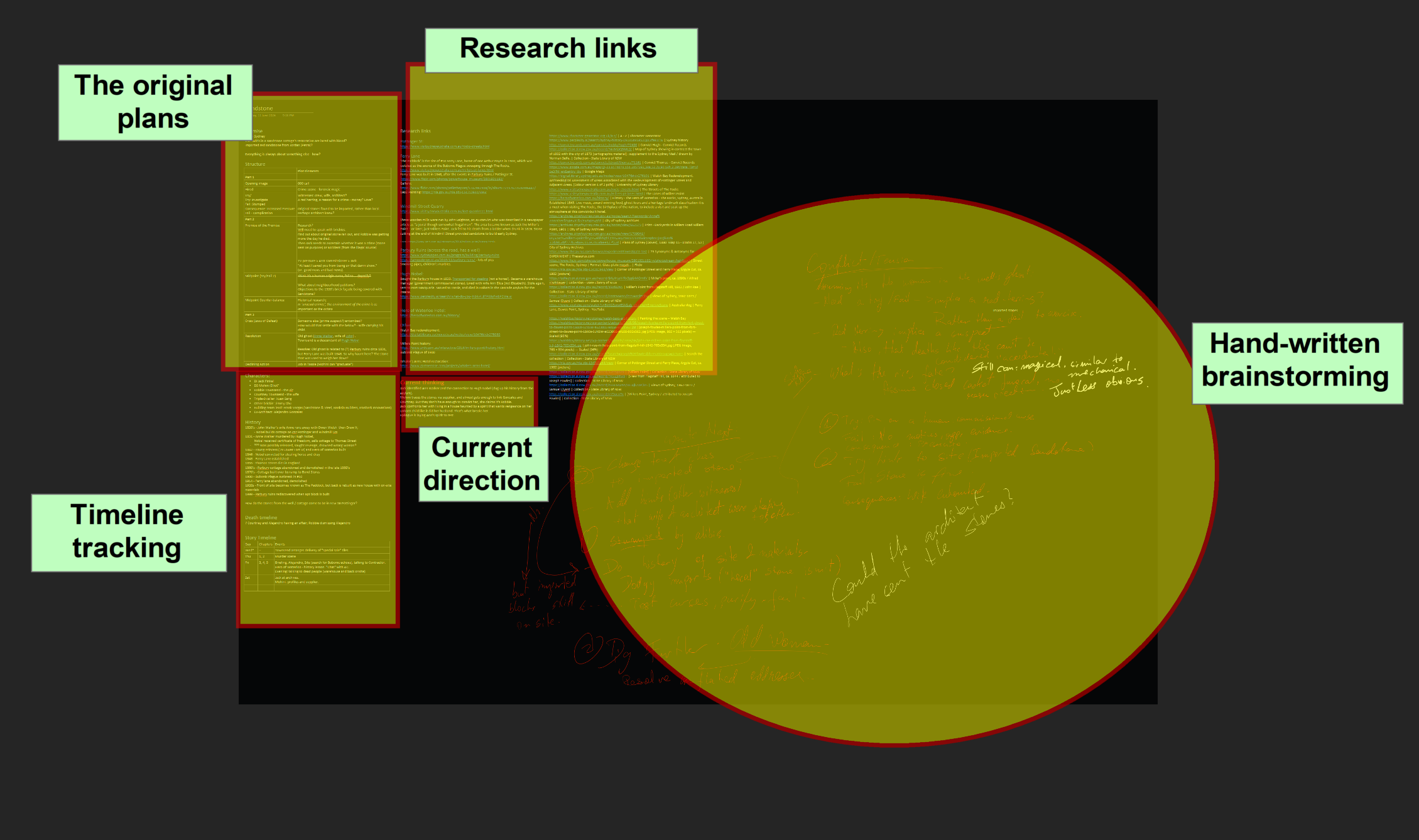
The notes about the story I keep in OneNote (simple, free, and works for me). I often have some sort of an initial plan for the novel — a plan my characters like to gather around and see who can come up with the most outlandish way to break. Needless to say, it does not survive chapter 3.
At that point I add a table to keep track of the time-line. It tracks what happens each day in the story, which chapters it happens in, and some general notes. Sometime I even remember to fill it in… usually a couple of chapters after the fact, when I notice weird time slips. I also add in a timeline for events before the story starts, as the protagonist uncovers clues.
It’s also the place I keep lists of research links (I’ll post about some of the amazing stuff I found researching Sandstone later). I’ve lately also started to keep a section titled “Current thinking,” about where I think the story is going. That section gets edited a lot, with each plot twist…
The last area is some hand-written scribbles (and why I use OneNote). When I feel really stuck, there’s nothing quite like the feel of a physical pen and writing long-hand (in indecipherable chicken scribbles, with lots of arrows and lines) to unjam my creative juices.
It ends up looking like this:
As I said, I tend to write faster as I near the end, and everything is come together. Once done, I go back to read through and fix the obvious plot holes and egregiously bad English. I often try to leave it for a few days, and then make another pass like it. I find that I add net more words than cut — all the foreshadowing, additional sensory depth, and general logical progression that I might have skipped over in haste. According to my unscientific polls on Threads and Twitter, authors are about split in half between over- and under-writing.
Once I’m done, it goes to my trusty alpha/beta readers, whose input is pure gold. Shout-out to Eric Klein and Doug Lumsden and Brent Harris in particular. If I can, I try to space out and have another beta reader round, followed by a professional editor (the incomparable Rebecca Norman, writing as Rosie Chapel), and then my sister for nitpicking any fat-fingered errors I made implementing the editor’s comments. All but my sister write cool fiction, so check em out!
After that it’s the gremlins turn to reintroduce some typos, while I hit publish 😜
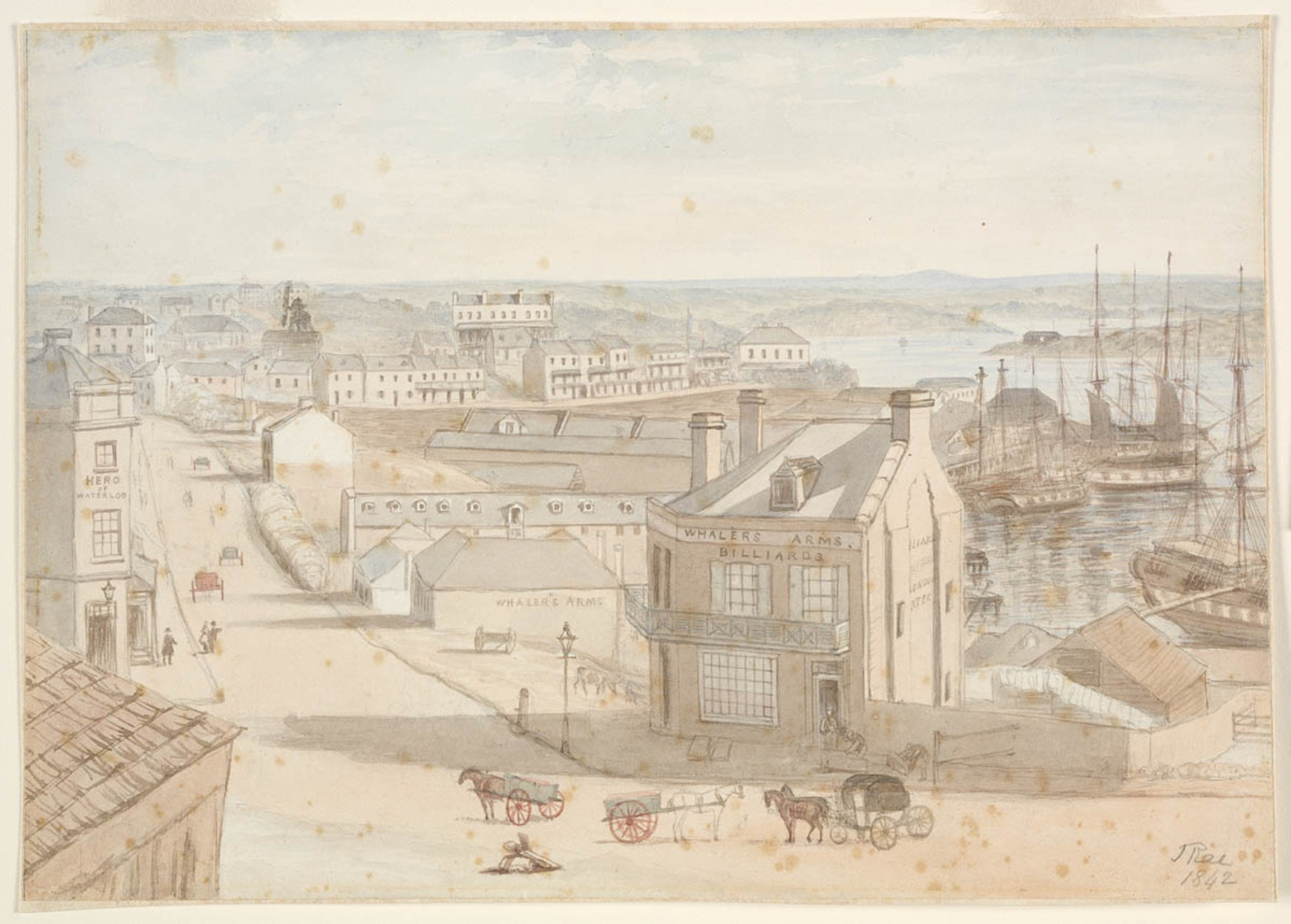
That’s it for now! As mentioned, Jack will appear in a flash fiction titled Poor Dead Larry on my newsletter (probably in time for the holidays), I will write about the book production process, and will share some of the amazing stuff I uncovered researching basically a specific street corner in Sydney (one I used to frequent on many a lunchtime walk).
 FELIX THE FOX MYSTERIES