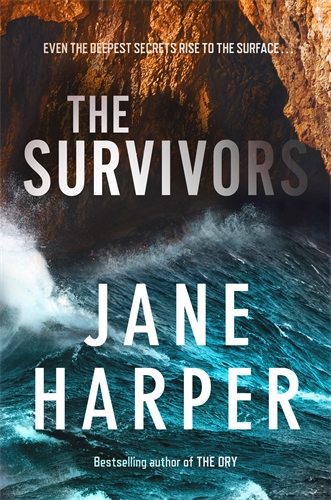
I’ve read The Survivors by Jane Harper and watched the Netflix TV series at the same time, so — rather than a plain review — I thought I’d do a post on comparative observations about screen adaptation.
Ditto with The Thursday Murder Club novel by Richard Osman and the movie. Aaand I’ve covered Jane Harper’s debut novel and its movie adaptation The Dry before (because I love Outback Noir). So I have a bit to draw upon, ahead of the imminent* adaptation of my own works into blockbuster movies and series.
(* One can dream).
First, let’s start with the basic reviews along my usual format, about what to expect and what worked or didn’t. This covers both (though centred on the book).
Review
What to Expect
A small-town murder mystery, where there are a lot of under-the-surface tensions and old wounds. It’s a new novel from one of the originators of Outback Noir, this time set in a small town in beach-side Tasmania. A young couple and baby daughter go back to their home town to visit the man’s aging parents. While there, a waitress is murdered, and this reopens wounds from the past.
The man, Kieran, tries to navigate relationships with his parents and friends, as the murder throws the town in to chaos and brings back an accident from 12 years before. Back then, his brother and another lost their lives in a freak storm trying to save Kieran from drowning. Those scars never healed properly, let alone the disappearance of another teenage girl at the same storm.
What I liked
I love the setting, being Tasmanian myself these days. It ‘feels’ right, and — for those outside — would be a familiar-yet-exotic location for a cosy mystery. Harper is adept at creating the various personalities around town, at building tensions, and slowly exposing the old wounds and correlating them to the current crime. Anther draw for me is the great sense of place; readers of my works will know how much I appreciate the location as its own ‘character’ in the novel.
What to be aware of
Harper is repeating a similar formula to her debut novel, The Dry; in both cases the current crime is deeply related to the old one, and details are slowly exposed via flashbacks and memories, and the perpetrator is the one you least expect.
I found Kieran somewhat less relatable than Falk (protagonist of The Dry), a bit feckless. Then again, he’s a visitor and not a police investigator. Even though Kieran plays a key role in both the old accident and uncovering the current perpetrator, at least Harper doesn’t fall into the ‘police are clueless’ trope — they are just half a step behind.
Felix’s and Jack’s Reviews
Felix thought Kieran could use a good slap to make him appreciate life, as that’s how he was raised to deal with trauma. He’s very familiar with past accidents and guilt from dark chapters in his own past, but he takes it as a motivator for action, not for moping. In terms of mystery, he thought there could have been more red-herrings before the sudden ‘nice character from the sidelines’ turning out to be the perpetrator.
Jack approves of the novel, having recently been seconded to Tasmania Police himself. He did prefer the TV series to the novel, which — being a different medium — shows a far greater role of the police (and other characters) and has a more dynamic pace. Aside from that, he found the setting, the dynamics, and the mysteries true to life.
On Screen Adaptations
Us literary types tend to scoff and sneer at screen adaptations, whether big screen or TV, for missing a lot of the depth and richness of the novel. Lots of images of icebergs captioned with “don’t judge a book by its movie.” But in a sense, this is like comparing watercolours to oil paintings; or, actually, watercolours to ballet. It’s entirely different mediums of expression, and the rules of storytelling are different because of it.
So in reviewing adaptations, I never look for an exact replication. It’s neither possible nor desirable — the new medium removes some devices while opening up new possibilities. It’s only fair that the storyteller explores them. What I am looking for in such adaptations, is whether they captured the essence of the story, and managed to tell it in the new format in ways that are engaging and suitable, without losing anything critical. That the new story contains strong echoes of the original, and can stand on its own (without being a confused mess, having lost too much background).
With that in mind, how do the recent adaptations I’ve seen measure?
When it comes to her debut novel, I felt the movie based on The Dry fell short of the mark. I felt it didn’t give enough of the background and slow-reveals, and thus ended up being a bit of a disjointed, colder story. It didn’t drag you with it into the oppressive atmosphere of the drought quite as much as the book did.
With that in mind, I did want to try and watch the TV series for The Survivors — not the least of which because I live in Tasmania and enjoy the dark crime dramas set here. I’ve also read this article on the ABC about what it took to create the fictional town for the series. Quite an interesting window into location filming and set construction (and both novel and series have a strong sense of place).
Some observations about the differences, in no particular order.
POV
The whole book is told from the Kieran’s POV (narrow 3rd, for the literary nerds). The TV series is done as is common, switching between scenes involving different people and locations. I’ve seen a few first-person narratives translated into screen by keeping the internal dialogue as a narrator’s voice-over (ref the recent MurderBot series from Apple, which is pretty good in itself though it’s been a while since I’ve read the novel).
In the novel, we are restricted to what Kieran can see and observe, so a lot more gossip and far less visibility into police work. If something happens between two other characters he either has to be there or told about it later. The TV series isn’t restricted like that, so can use scene changes to quicken the pace and use the information imbalance between characters to build tension.
Characters and Conflicts
Some of the characters have been changed for the series: from their family relationships to personality. Some of this was to provide more conflict (like changing a stepfather to a grandfather), others to leave space for the different POVs (more police drama: the local policeman steps aside to leave room for the out-of-town’s detective work).
Again, I don’t rail against this on purist principle, I’m just observing whether these changes work for the story. And I think they overall do. The nature of the town and clashes does change a bit: from a colder, slower reveal we get more emotional and confrontational interactions. These fit the medium of TV better, less atmospheric (which is well compensated for with cinematography) and more action (to keep you binge-watching).
Sub-plots and red-herrings
In creating those conflicts, the producers have also enhanced and created new suspects and red-herrings to enhance the drama. Characters that were more subdues are now more explosively clashing (with good motivation for their actions), and characters that were on the side-lines are now suspects in themselves. The TV has more space to enhance those avenues, while in the book one was late and only hinted at, while the other was completely missing.
Final thoughts
What I observed is that, surprisingly, I liked the TV series better.
The novel is atmospheric and slow burning. It takes time to expose the deep scars of past events, and since Kieran isn’t the police he’s mostly observing (until he reaches the final revelation). There is nothing wrong with that, even though I found Kieran himself a bit meh.
In contrast, the series is more dynamic. We see more of the police work, there’s more action in general, and the various suspects and community response to them is much more exposed. In the book we have the town’s online community gossips, in the series we have it explosively in your face. As any author would tell you, there are multiple types of tension, but you can’t go wrong with a bit of overt conflict.
More than that, I absolutely adored Damien Garvey’s portrayal of Brian, Kieran’s dementia-suffering father. In the book he’s referred to pretty much in the same way Kieran’s baby daughter is. In the series Garvey’s expanded role and brilliant acting are an absolute highlight, both for the writing and the expression. I much prefer that confronting depiction of dementia in general, but beyond this personal taste acting is more than just delivering the dialogue and is one of the (many) reasons why the different storytelling medium require adaptation of stories.
Supporting evidence: The Thursday Murder Club
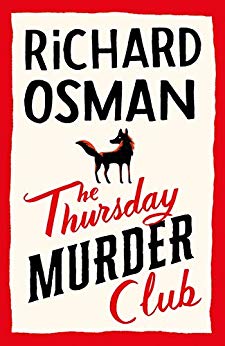
I kept this one shorter, because that’s the big blockbuster you probably heard of — I try to highlight the lesser known gems whenever I can (at least lesser known outside of Australia).
Anyway. As before, some back-stories have been changed due to the constraints of the medium, some of the evidence and progression of suspects has been altered to increase stakes and tension, but overall a very similar story with a very similar shape. So how did this translation work?
I’ve reached similar conclusions to the above. If we break down the different elements between books and screens further, I’d say that the one thing novels have that screen adaptations can’t is prose, while the main thing standing for the live version is acting. (Of course there are more that just those, but they are often the prominent aspects that can’t be ‘shared’ between the different mediums).
The Thursday Murder Club has bloody brilliant actors. Ben Kingsley (on whom I based Zymaxis in Murder In Absentia), Helen Mirren, Pierce Brosnan, and on and on… The top shelf of British character actors, who give an amazingly engaged, funny, and touching performance. This makes it a joy to watch.
And when we look at the book, the prose is… meh. I found it very simplistic. Don’t get me wrong, there’s nothing wrong with the story — the pace, scene breaks, characterisation, plot, scene setting — it’s still a very good book. Osman does a good job of capturing the gentle, tragic feel of many characters, aging as they are in a world that is rushing by them. But the language itself and the tendency to use first names ten times in a short dialogue, are less than great. Seriously, when did you casually use a friend’s name repeatedly while talking to them? And what’s with the present tense, and 3rd person except the one character who writes in the diary in first person past tense? Some literary devices are just annoying.
We all know you can go too far into purple prose territory, just as you can with ham acting. My point is that this should have been a strong differentiator — outside of aspects that can be replicated across the different mediums — and it just wasn’t.
There are certainly good bits in the book that didn’t translate or made it into the movie. In particular, a couple of touching, sad moments that were completely cut out and missed (exactly the opposite of The Survivors, where those additions were emotional and memorable). And then there are things that just work better for that story in the movie — some of the visuals, the tempo. So it’s another example how different artistic mediums can carry different stories, and how the strength of adaptation relies on having stories and mechanics that work well in each.
Summary
The best book-to-screen adaptation, in my opinion, where both the book and movie are brilliant in terms of story and mechanics in their own right, is, of course, The Princess Bride. It’s one of the very few I’ve seen where each one just stands very strongly on its own. It makes for an almost impossible bar, but it’s still intriguing to analyse and compare when you have two good retellings across the different mediums.
So yeah, 6 reviews in one post: novels and adaptations for The Dry, The Survivors, and Thursday Murder Club (and honourable mentions to MurderBot and The Princess Bride).
There are some things that often work better in novels (back-stories, convoluted red-herrings, introspections, breadth), and some that could work better on screen (pace, direct conflicts, visuals, certain kinds of tension). It’s not absolutes, and it’s not guaranteed. Sometimes the adaptations are excellent for their own sake, and sometimes they fall short — even when the story structure itself, the characters, and the scenery are otherwise very similar. It’s almost like the shape of the story is the same, even if details of the texture aren’t. One can build tension in many ways, but conflict and expressions of emotions are almost never a bad choice. One just needs to make the right choices for the medium, in a way that can carry the story best.
I hope you found some insights in these; I attempt this as an exercise in critical thinking about the art of storytelling, using comparisons to learn about each medium’s rules, strengths, and weaknesses.
As for The Survivors, it’s good read for lovers of cosy mysteries, the exotic location being a bit part of the draw. If you’d like to watch the mini-series (which I heartily recommend!), it’s available on Netflix. Ditto with The Thursday Murder Club.
Want to be first on the ground, so you can tell everyone you knew them before they became a screaming screen success? Come meet Felix and Jack on the free short stories and novels!
 FELIX THE FOX MYSTERIES
It’s almost impossible for adaptations to stick to a novel’s plotline or narrative. At this moment I’m trying to develop an interactive companion for my novel The Maharajagar and had to make substantial changes to the plotline and cut deeply into the narrative to integrate it into the new format.
LikeLiked by 1 person
They can’t, but that’s why it’s an adaptation. As long as you capture the essence of the story, you should do well 🙂
LikeLiked by 1 person